About CIBG
Discover our history, objectives, and our team.
Our History
The ICGB emerged as an international academic initiative aimed at responding to contemporary ethical challenges that appear in contexts of global interdependence, structural vulnerability, technological transformation, and socio-environmental crises. Its creation responds to the need for an intercultural, inter-institutional, and transdisciplinary space capable of articulating global bioethics with human rights, global justice, and environmental sustainability.
The International Committee on Global Bioethics (ICGB) is an independent international initiative. It is not affiliated with UNESCO or with UNESCO's International Bioethics Committee (IBC). The ICGB develops its work autonomously and promotes open, interdisciplinary, and intercultural dialogue within a shared commitment to human rights.
Our Objectives
- •Analyze contemporary ethical dilemmas from the perspective of global bioethics.
- •Promote approaches based on human rights, global justice, and sustainability.
- •Develop methodological tools to guide ethical deliberation in complex contexts.
- •Foster intercultural, inter-institutional, interreligious, and transdisciplinary dialogue.
- •Drive research, training, and academic spaces focused on global bioethics.
María Victoria Fernández Molina
María Victoria Fernández Molina holds a PhD in Human Rights: Ethical, Social and Political Challenges from the University of Deusto. She is a researcher at the Inter-American Academy of Human Rights of the Autonomous University of Coahuila (AIDH-UAdeC) and a collaborator at the Anáhuac Center for Strategic Development in Bioethics (CADEBI). She is a Level I National Researcher within Mexico's National System of Researchers (SNII), Coordinator of the Mexico Chapter of the Observatory on the Right to Food in Latin America and the Caribbean (ODA-ALC), an initiative supported by the Food and Agriculture Organization of the United Nations (FAO), and a Fellow of the UNESCO Chair in Bioethics and Human Rights. Her academic work focuses on Global Bioethics, Human Rights, International Law, and the right to food.
José R. Grijalva Eternod
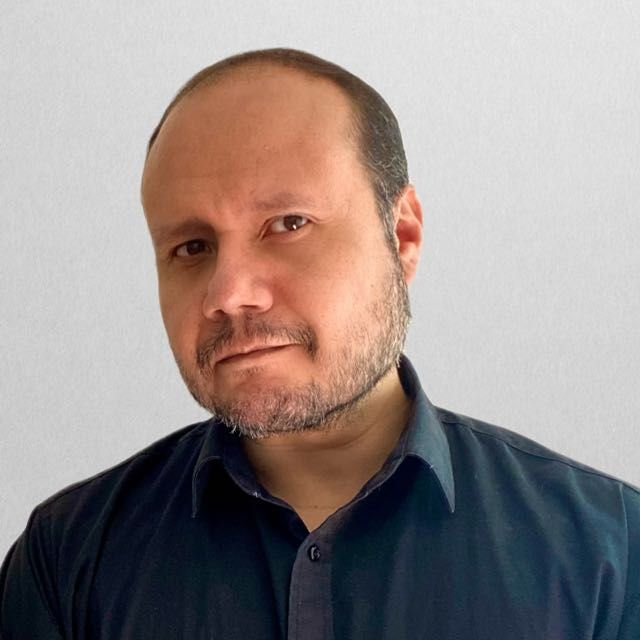
José R. Grijalva Eternod is a researcher, professor, and specialist in Human Rights and Global Bioethics whose work connects law, ethics, human dignity, education and peacebuilding in contemporary global contexts. He currently serves as researcher at the Center for Human Rights Education of the Inter-American Academy of Human Rights and as professor at the National Institute of Criminal Sciences and the National Judicial School in Mexico. His academic and professional trajectory has focused on interdisciplinary approaches to human rights, global bioethics, constitutional law, and the construction of peace, as well as on the development of human rights education and ethical deliberation methodologies. He holds a PhD in Advanced Human Rights Studies from Universidad Carlos III de Madrid, a Master's degree in International Law and International Relations from Universidad Complutense de Madrid, and a Law degree from Universidad Nacional Autónoma de México, with further studies in Sociology and doctoral-level training in Applied Bioethics. Throughout his career, he has collaborated with universities, public institutions, and international organizations, and has held academic and leadership positions as Research Fellow at the United Nations, Coordinator of Gender Studies at Universidad Carlos III de Madrid, and academic director in multiple higher education institutions. His work combines academic research, teaching, and public engagement, with numerous publications and contributions in human rights, global bioethics, and related fields.
Advisory Board
International Advisory Board
The International Advisory Board brings together distinguished specialists who provide strategic and academic guidance to the Committee. Its members contribute international experience, independent advice, and diverse perspectives to strengthen the development of global bioethics through a pluralistic, interdisciplinary, and human rights-based approach.
CIBG Executive Board
Responsible for the strategic direction and main decision-making of CIBG.
Thematic Working Groups
Specialized teams addressing specific areas such as genetics, artificial intelligence in medicine, clinical research ethics, and global bioethics.
Advisory Board
Composed of international experts providing guidance and diverse perspectives on emerging bioethical issues.
Secretariat
Manages daily operations, coordinates activities, and facilitates communication between members and stakeholders.
Our Areas of Work
Four fields of reflection, one shared vision
The Committee organizes its work around four areas connecting human rights, health, education, and food systems. Each area brings together different disciplines, experiences, and regions to develop responses grounded in global bioethics.
A Shared Methodology
The four areas work in an interconnected manner and share the principles of dignity, vulnerability, global justice, solidarity, sustainability, responsibility, and precaution. Bioethical dilemmas may be examined simultaneously through several areas, encouraging plural and interdisciplinary deliberation.